There was a reason it took this corner quite a while to come onside with rugby. Until the nuances of the game were understood properly, all it looked like to me was f*t fellas trundling around and jumping on top of each other like young bulls turned out to fresh grass.
More fool I. For once the finer points thereof were picked up on – to a better degree at least – it allowed it to be appreciated for the intriguing battle of intellectual and physical strength it is.
As with any situation, becoming more attuned to the intricasies of the game was easier when it can be compared to something which is, initially at least, more familiar. Thus, if asked to describe rugby to somebody who had just happened upon the code, the response would be somewhere along the lines of the following.
Well, first off, it is of course important to point out that there are two different codes of rugby – Union and League. To differentiate between the two, Union, as well as being the more regularly available, contains more kicking of the ball compared to its counterpart – in which setpieces are more or less perfunctory.
But, as regards the nuts and bolts of the situation, you could say there are crossovers between the two rugby codes, American Football and, to some extent, Gaelic football. Take, for example, the Rugby League/American Football similarities in that, in each code, teams are permitted to retain possession for a set number of phases of play before being forced to either kick the ball or surrender it by other means.
Where the Gaelic football comparison is validated is as follows. In both our native football and Union, you are basically not allowed handle the ball on the ground. Now, close to home, it means exactly what it says on the tin. In men’s football, you cannot lift the ball directly from the ground or touch it when stationery thereon.
The rugby equivalent is slightly different in that while a player can handle the ball on the sod, once they are tackled – i.e. brought to the ground and held – they must release the ball. Failure to do so resulting in being pinged for a penalty. That above only outlines one of what are a phalanx of infringements punishable by penalty kick. There are that many of them, indeed, that you suspect even players are learning them on the hoof.
However, once you do become properly au fait with the game, it truly can be cracking entertainment. Which, to a very large extent, has been the case during the World Cup currently winding its way towards a conclusion.
Naturally, from an Irish perspective, the fizz went out of it once our lads were agonisingly eliminated. But if judging the tournament on a whole, this corner would be inclined to muse that all the bravery and skill in the world won’t paper over the cracks exposing the haves from the have nots in the game. Both in terms of players and referees.
Wayne Barnes – the new poster boy for rugby referees since Nigel Owens called time on his memorable career – undoubtedly had a few howlers of bad decisions in the Ireland-New Zealand match, but he is still, by some distance, the best exponent of his craft there is. On the other hand, Ben O’Keeffe looked as much out of his depth as a cow looking for a Bank Holiday off!

Both before and during the tournament, there have been a lot of murmurings – mostly from entities who wouldn’t be properly attuned to goings on in the oval ball code – that it’s not really a World Cup. Presumably, the rudiments of such of viewpoint have their origins in the belief that only a handful (or less) of teams have a realistic chance of attaining the William Webb Ellis Trophy.
To my mind, that is the case with most major tournaments in most sports. I totally get the train of thought in that it can’t be good for the game seeing teams like Namibia and Romania taking thrashings. But, put very simply, every team have to start somewhere.
Games will only develop in countries by them playing matches against teams at different levels to themselves. Yes, there may be scalpings along the way, but anybody having misgivings about such being the case need only look to the case of Leicester City.
The Foxes, after all, went from surviving in the Premier League by the skins of their collective teeth to winning the thing outright the following season. No, I am not expecting the same to happen in rugby anytime soon. But the point is improvements can be made.
In the short term, mind you, it will probably come as little surprise to anybody that the two teams to turn up in the Final have done so. Having said that, such being the case actually brings us back to the notion of papering over the cracks.
Because, even though rugby’s self-righteous, pompous opinion of itself won’t like to hear the following, it’s not that New Zealand thread on thin ice, more a case of diving off a springboard and leaving a crator in their wake. Put it this way, Richie McCaw got away with more dodgy dealings in the scrum than some former Irish bankers did on a golf course.
In both cases, it was nearly as if those in positions of authority were afraid to deal with the transgressors were terrified of doing so. As a dear, departed comrade used to say about people in another facet of life, “They’re afraid of ending up in the B****x Book”. In other words, having their career ambitions stifled because they rattled the wrong cages.

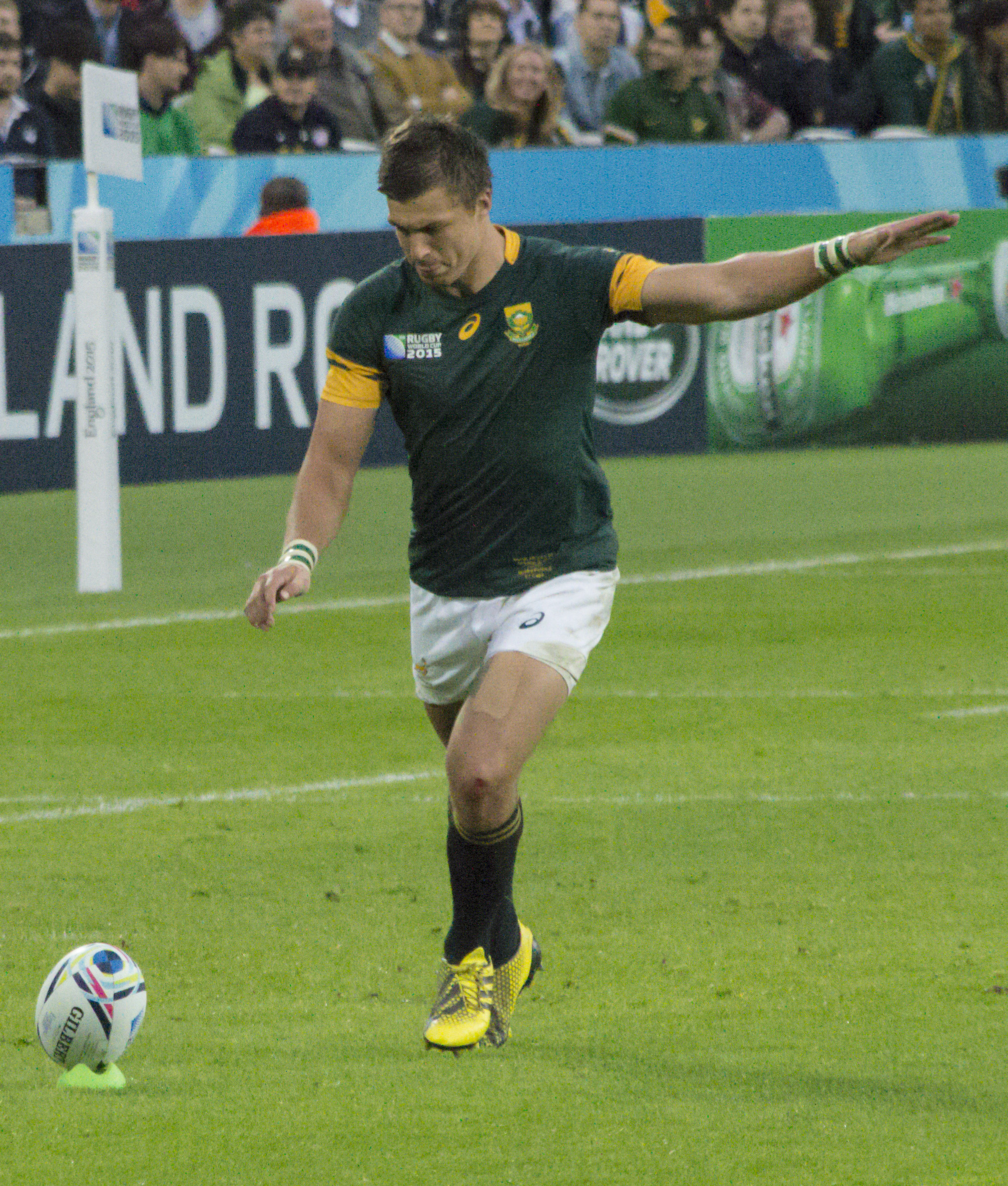
Therefore, while South Africa will be pondering what combination to field at half back – whatever incarnation they go with must surely have Handre Pollard at 10 – they will also have to make room in their calculations for the opposition possibly having an extra man.
Leave a Reply