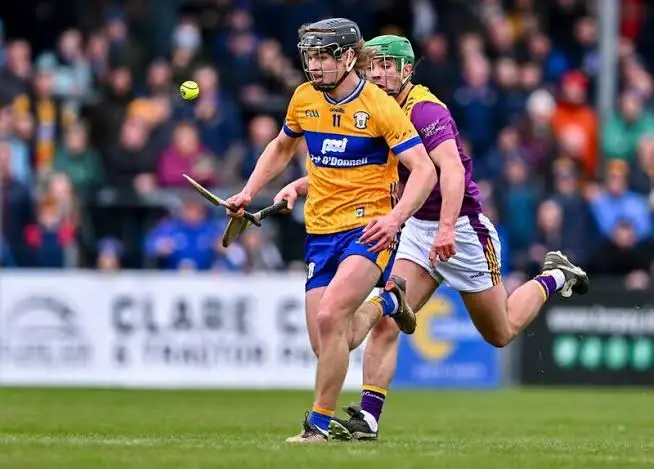
Pip: There’s a certain type of sports fan who watches a match, clocks the final whistle, and immediately starts thinking about curses. Brendan, writing for Boylan Talks Sport, is that fan — and honestly, the evidence is hard to argue with.
Mara: This episode covers two stretches of ground: Clare’s long, hexed relationship with All-Ireland glory, and Cork hurling’s recurring Croke Park nightmare. Let’s start with the ghosts.
All-Ireland Memories
Pip: The thread running through Clare’s All-Ireland story isn’t just bad luck — it’s a pattern so consistent it starts to look like something structural. Every triumph seems to carry a hidden penalty clause.
Mara: The post traces it all the way back, and the framing is direct: “whatever Biddy is supposed to have done, they did go from 1927 to ’95 without seeing Liam Mac Carthy.”
Pip: And each win since then has come with its own sting — Ciaran Carey’s point, the Jimmy Cooney clock error, Colin Lynch’s suspension, and now Nickie Quaid staying on the pitch when he arguably shouldn’t have.
Mara: The 2025 defeat to Limerick is the anchor here. The piece argues referee Thomas Walsh should have allowed Peter Duggan’s goal and issued Quaid a black card — instead, the penalty option left Quaid between the posts, where he later denied Duggan a score that would have won it. The post also flags the departures of Aidan McCarthy and Shane O’Donnell as part of the same creeping pattern.
Pip: And yet the piece isn’t a eulogy. Young players like Diarmuid Stritch, Michael Collins, and Daire Lohan are named as reasons to believe the Clare pipeline is still running.

Mara: That’s the balance the post strikes — hex acknowledged, future open. Which makes the Cork situation feel like a different kind of problem entirely.
Cork Hurling Frustration
Pip: If Clare’s trouble is fate, Cork’s is something harder to explain away — because fate doesn’t repeat the same half-hour collapse twice in consecutive seasons.
Mara: “Running out of ammunition for the blame game” opens exactly there: “Never has the same team produced two identically appalling displays on the big pitch in such quick succession.”
Pip: Two identically appalling half-hours is a pattern, not a fluke. The question the post is really asking is whether Cork have run out of excuses before they’ve run out of problems.
Mara: The match detail is important here. Cork actually led at half-time, one-thirteen to one-twelve, after Alan Walsh’s goal kept them in it despite Darragh Neary’s early strike for Galway. They had a six-point buffer at one stage and let it dissolve to one before the break.
Pip: A six-point lead turning into a one-point lead by half-time is already a warning sign. What followed was apparently the same alarm going off again.
Mara: Gavin Lee tied it immediately after the restart, and then — as the post puts it — Cork “hit the self-destruction trigger once again.” Darragh Fitzgibbon’s red card with fifteen minutes left is the focal point, though the post is careful to note Galway’s quality made the margin of Cork’s problems bigger than one sending-off.
Pip: The Fitzgibbon question is almost a side issue, which is the damning part. The post says even with a full complement Cork may not have stemmed it.
Mara: Right — the piece describes Galway’s second-half hurling as having “fluidity, freedom and class” that looked unstoppable regardless. Daithi Burke was tormented by Brian Hayes going forward, but Jason Rabbitte was doing equal damage at the other end. The problems ran in both directions.
Pip: So Cork go again. The post ends on that — “do it all again, and then some” — which is either motivational or a very polite way of saying the rebuild is larger than one result.
Mara: It reads as both. The post doesn’t name a fix, just names the size of the ask.
Pip: Curses, collapses, and the question of whether good young talent is enough to outrun a bad pattern — not a bad week’s worth of thinking about hurling.
Mara: Both pieces are really asking the same thing from different angles: at what point does history stop being context and start being the story itself?
Fág freagra